Job’s Not Finished: Article 1
Form Follows Fiction
Written by Matthew Taylor
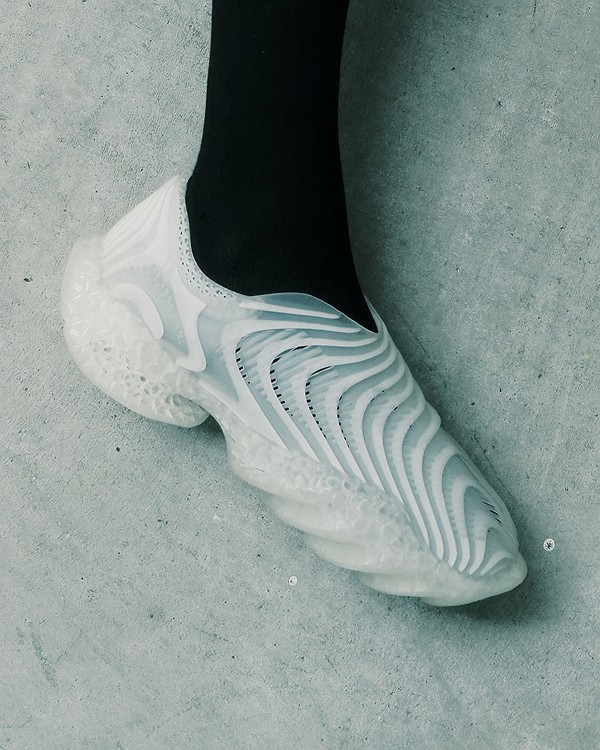

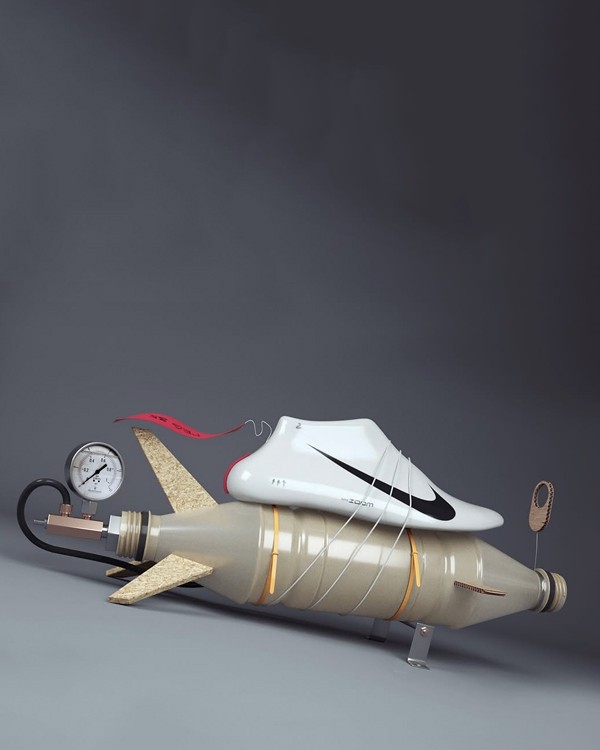
Speaking exclusively with some of today’s leading creative thinkers, CONCEPT(K) examines how storytelling has become the essential foundation of modern design.

When asked by a journalist why he looked unhappy despite the Lakers being 2–0 ahead in a best-of-seven series against the Orlando Magic, Kobe Bryant gave the iconic reply: “Job’s not finished.”
The Lakers went on to win the series 4–1, perhaps largely because of Kobe’s refusal to acknowledge what others may have considered “excellent” as enough. Using this as an analogy for the design process in today's landscape, a well-designed, functional product — no matter how well executed — represents a similar situation:
An outstanding achievement? Definitely. Better than most of the competition? Quite possibly. But in terms of achieving the larger goal of commercial resonance and cultural relevance — is the job finished?
Put simply, great aesthetics and functional design combined with traditional methods of product rollout are no longer enough. While classic formulas such as exploded views and athletes on billboards may have once stood out, audiences — and their expectations — have changed.
A product now needs to be imbued with narrative. It needs a point of view that moves an audience and appeals to their values; something that makes them care.
A product also needs to exist in a world built around it — and where previously that world may have been handed to other units within a business to construct as a post-rational (marketing, PR, etc.), today, for standout products and brands, the story begins at inception.
But why is storytelling important? Felipe Guimarães, ECD of legacy advertising agency BBH, puts it bluntly:
“People don’t buy products. They buy brands. And brands are built on the stories they tell. Create a world I want to be part of and use your products as a gateway into that world. Good design epitomizes the world you are trying to create. Tell me a story so good I want to be — have to be — a part of it.”
But when did this become necessary? And why — and how — have audience expectations changed? According to Cameron Temple, ECD of digital agency STINK, great aesthetics now only qualify you for a seat at the table:
“Without a story or deeper concept behind what we create, it’s very difficult to establish any sense of connection or resonance with people. As a result, what may have stood out 10 or even 5 years ago can just fall flat without a story to elevate it within the sea of sameness.”

Temple goes on to describe an interesting inversion on traditional standards; minimal production value paired with strong narrative can out-resonate a high-budget campaign that lacks one:
“On the other end of the spectrum, we constantly see stories succeed without any visual craft or refinement. How many TikToks have you seen with 1M+, where the content is just some roughly greenscreened video onto a stock background? That’s because the relatability chord it strikes far exceeds the visual value.”
He concludes by asserting that a compelling narrative, combined with modern visual tools, has become the new creative bar:
“When we combine the two is when things really take off. An authentic, relatable story that connects with the audience, powered by the incredible tools we have at our disposal in 2025, is what differentiates ordinary from extraordinary.”

If the standard for creative resonance has shifted from “form follows function” to “form follows fiction”, what does that mean for designers?
To gain relevance, it has become vital to consider a product’s story from inception through to release. Every designer represents their own personal brand and journey — and thus is constantly telling a story, whether to themselves, their online community, their team, or directly to a customer.

Errolson Hugh of ACRONYM frames it perfectly:
“Whether you like it or not, as a designer, your work/product/brand/career is part of a narrative, is telling a narrative, is being evaluated based on its narrative.
Everything tells a story, at every level, all of the time.”
He continues:
“When all of the narratives of a given thing are congruent — from form to function, process to product, micro to macro — that’s when the magic happens. That’s when you get resonance, connection, and meaning.”
Today’s best brands and designers embody this layered congruence. They don’t just release objects; they reveal processes, sketches, and prototypes. They show the conversations, the collaborators, the intent. This transparency itself becomes a form of storytelling — one that audiences trust.
Hugh adds:
“Narrative is also why brands that people actually care about are not primarily driven by the money. ‘We made this to make a lot of money’ is a boring-ass story.”
It’s a truth that anyone in professional design — especially fashion — knows instinctively. When smoke and mirrors clear to reveal profit as the primary motive, even the most technically accomplished work can feel hollow.
Hugh concludes:
“Learning to read and write a product narrative is like learning to read and write a language. You need to know the vocabulary, understand the grammar, and be aware of cultural and historical context. It takes time (the learning never ends), and you will make mistakes. The mistakes are the only way forward. Telling your own narrative means that no one else has told it before, so you have to figure it out as you go along.
Who tells the best story, wins.”